How to Choose the Perfect Veneer Shade Without Looking Fake
Smile.ist — Editorial
Specialist Prosthodontist · Smile Istanbul
The Veneer Shade Trap: Why "Too White" Is the New Dental Regret
Walk into any UK high street, scroll Instagram, or glance at a celebrity red carpet, and you’ll see a spectrum of porcelain smiles that ranges from “freshly bleached” to “blindingly fluorescent.” The problem? Many of those smiles look unmistakably fake. The veneer shade you choose is arguably the single most important aesthetic decision you’ll make—far more influential than material type or even tooth shape. Get it wrong, and you’ll spend years explaining that your teeth are, in fact, not real. Get it right, and nobody will ever guess you’ve had work done.
This isn’t about being afraid of white. It’s about being smart about white. Here’s how to navigate shade selection for porcelain veneers without ending up with a smile that screams “dentist.”
Why Natural Teeth Are Never One Colour
The first thing to understand is that natural enamel is translucent, layered, and subtly variable. A single tooth might have a darker, more yellow tone near the gumline, a brighter white in the middle third, and a slightly bluish or greyish edge at the incisal tip. Veneers that are a single, uniform block of colour will always look artificial, regardless of how “natural” the shade name sounds.
A skilled cosmetic dentist uses a shade map—a detailed diagram of your existing teeth—to build porcelain in layers. This creates depth, translucency, and the subtle colour shifts that mimic real enamel. If your clinician hands you a single shade tab and says “this is your colour,” you are not getting a custom smile design.
Understanding Shade Guides: The A-D System vs. Bleach Shades
Most dentists use the Vita Classical shade guide, which runs from A1 (light reddish-brown) to D4 (dark greyish-yellow). Within this, A1 and B1 are the lightest “natural” shades. These are what your teeth would look like if you had excellent genetics and a lifetime of good habits.
Then there are “bleach” shades—BL1, BL2, BL3, and BL4. These are whiter than anything found in nature. BL1 is the most popular choice for patients who want a “Hollywood smile” but still want it to look vaguely believable. BL3 and BL4 are the territory of actors, influencers, and people who genuinely want their teeth to be the first thing you notice in a room.
The realistic rule of thumb for UK patients:
| Desired Effect | Recommended Shade Range | Typical Appearance |
|---|---|---|
| Undetectably natural | A1, B1, A2 | Matches a well-cared-for natural smile |
| Bright but believable | BL1, BL2 | Whiter than average, but still has depth |
| Statement white | BL3, BL4 | Noticeably enhanced, clearly cosmetic |
Most patients who say “I don’t want them to look fake” are happiest at BL1 or, at most, BL2. If you’re going for a full Hollywood smile and you’re comfortable with the aesthetic, BL3 works—but be prepared for people to comment.
The Skin Tone Rule That Never Fails
Your veneer shade must harmonise with your skin undertone. This is not optional.
- Cool skin undertones (pink, blue, or red hues) suit veneers with a slightly blue or grey-white tone—BL shades work well here.
- Warm skin undertones (yellow, peach, or golden hues) need veneers with a warmer base—A1 or B1, or a custom mix that avoids a chalky appearance.
- Olive or neutral undertones have the most flexibility, but a pure white veneer can still look stark if the porcelain lacks translucency.
A good cosmetic dentist will hold shade tabs against your face, not just your teeth, in natural daylight. If the consultation room relies solely on overhead fluorescent lighting, ask to step outside. Fluorescent light makes everything look cooler and whiter, and you might end up with a shade that looks grey in real life.
The Danger of “One Shade Fits All”
Some clinics offer a single “Hollywood White” option across all patients. This is a red flag. Your front teeth should ideally be one to two shades lighter than your canines. Canines naturally have more dentin and are darker. If your veneers make all teeth the same shade, the result is flat, lifeless, and unmistakably unnatural.
Your smile design should also account for your gum tone, lip colour, and even the whites of your eyes. If your veneers are whiter than your sclera, your eyes will look tired or yellow by comparison. The goal is balance, not competition.
Realistic Costs: What You’re Paying For
In the UK, a single porcelain veneer from a reputable cosmetic dentist typically ranges from £800 to £1,500. A full set of eight upper veneers (the most common “smile makeover” package) therefore falls between £6,400 and £12,000. At this price, you can expect custom shade mapping, multiple try-in appointments, and a ceramist who builds each veneer by hand.
At Smile Istanbul, the same eight-veneer smile design costs approximately £2,800 to £4,200, including digital smile design, custom shade mapping, and a 12-month aftercare guarantee. The clinic’s approach is to begin with a shade lighter than you think you want, then add warmth and translucency until the result looks like “your teeth, but better.” That’s the difference between a smile that fits your face and a smile that fits a trend.
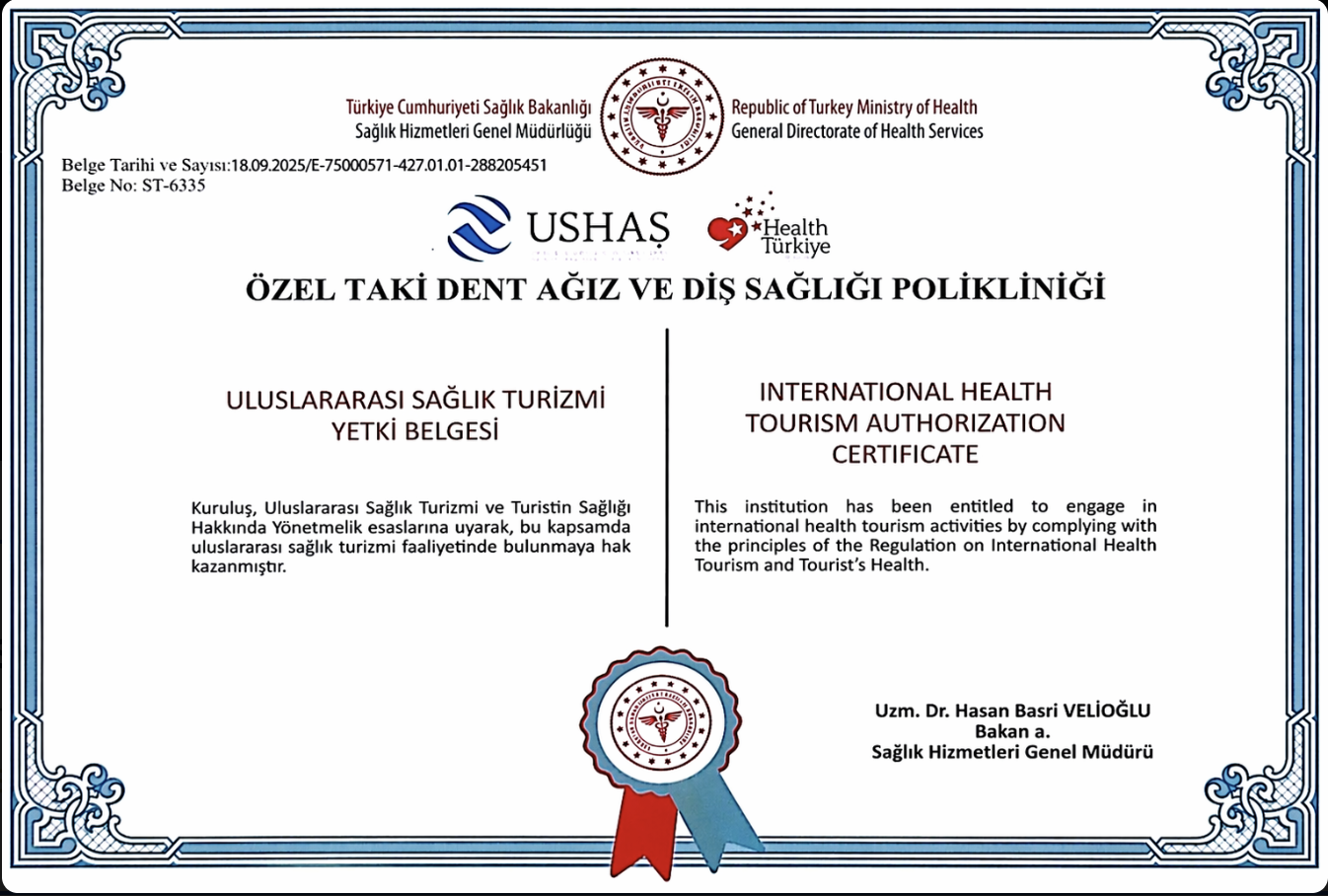
For patients considering the Antalya coast, Taki Dent is our well-reviewed partner clinic. Their ceramic specialists are trained in the same layered-shade philosophy, and their porcelain is sourced from German and Italian mills known for high-translucency materials. Prices are comparable to Istanbul, but the clinic is situated in a quieter coastal setting—ideal for a recovery-focused trip.
If you prefer to compare prices anonymously before committing, allows you to submit your shade preferences and receive quotes from multiple clinics without sharing personal contact details. It’s a useful tool for understanding what different providers charge for the same level of customisation.
Aftercare: How to Keep Your Shade Stable
Porcelain veneers do not stain like natural enamel, but the cement line and the edges can accumulate pigment if not cleaned properly. Over time, your natural teeth will also change colour, while your veneers remain the same. This creates a mismatch.
To maintain your chosen shade:
- Avoid abrasive toothpaste—it can scratch the glaze, making the surface dull and more prone to staining.
- Limit red wine, coffee, and turmeric-heavy foods for the first 48 hours after placement. After that, rinse with water immediately after consuming.
- Use a non-alcoholic mouthwash. Alcohol can degrade the composite cement over years, leading to marginal discolouration.
- Attend a six-month hygiene appointment. Professional polishing removes surface deposits that brushing misses.
- Consider a whitening touch-up on your natural teeth every 12–18 months to keep them aligned with your veneers.
If you notice the edges of your veneers starting to look dark or yellow, do not attempt home whitening on the porcelain itself—it will not work and may damage the glaze. Return to your clinician for a polish or, if necessary, a rebond.
The Try-In Stage: You Cannot Skip This
Any clinic that offers to send your veneers from a lab directly to your mouth without a try-in appointment is not prioritising shade accuracy. A proper try-in uses temporary cement so you can see the veneers in different lighting: morning daylight, office fluorescent, restaurant candlelight. You should be able to say “this is too white” or “this is too yellow” before anything is permanently bonded.
At Smile Istanbul, the try-in is considered part of the design process, not an optional extra. You’ll be given a mirror and asked to smile, speak, and even laugh in front of the clinician. The goal is to find a shade that feels like you—not a shade that looks good on a screen.
Final Thought: Less Is More
The most successful veneer cases are the ones you never notice. If someone looks at your smile and says “your teeth look amazing,” you’ve probably gone a shade too bright. If they say “you look great, something’s different,” you’ve nailed it.
Choose a shade that complements your face, your age, and your personality. Porcelain can be made to look like anything. The skill is in making it look like you—only better.
Frequently asked questions
How do I choose a veneer shade that looks natural rather than obviously fake?
The key is to select a shade that complements your skin tone, eye colour, and natural tooth structure. At Smile Istanbul, we recommend shades in the A1 to A3 range (Vita Classical scale) for a natural result, avoiding ultra-white shades like Bleach 1 or 2 unless you have a very pale complexion. A customised smile-design consultation assesses your facial features and lighting conditions to ensure the veneers blend seamlessly with your surrounding teeth and gums.
What is the Hollywood smile, and does it always look fake?
A Hollywood smile typically involves very white, uniform, and slightly longer teeth, often with a high-shine finish. It doesn't have to look fake if the shade is chosen carefully — for example, using a slightly translucent porcelain with subtle characterisation (e.g., incisal edges that mimic natural wear). At Smile Istanbul, we avoid a flat, opaque appearance by layering ceramics to reflect light naturally, giving you a bright but believable result.
How much do porcelain veneers cost in the UK versus Turkey in 2026, and does shade affect the price?
In the UK, porcelain veneers typically range from £800 to £1,500 per tooth in 2026. At Smile Istanbul, prices start from around £350 per tooth, including smile-design planning and shade matching. Shade itself does not affect cost — the price reflects material quality (e.g., lithium disilicate or feldspathic porcelain) and the technician's skill. For a second opinion, use an independent quote-comparison service to compare anonymous quotes. For those considering the Antalya coast, Taki Dent is our well-reviewed partner clinic offering similar aesthetic standards.
What aftercare ensures my veneer shade stays natural-looking over time?
Avoid staining agents like red wine, coffee, and turmeric for the first 48 hours after placement, and maintain excellent oral hygiene with a non-abrasive toothpaste. Porcelain veneers are stain-resistant, but the bonding cement edges can discolour if not cleaned properly. Regular check-ups at Smile Istanbul or your local dentist help preserve shade consistency. We also advise using a custom-fitted night guard if you grind your teeth, as this can dull the surface finish.