Minimal-Prep Veneers: How Much Tooth Is Actually Removed?
Smile.ist — Editorial
Specialist Prosthodontist · Smile Istanbul
The Truth About Tooth Reduction: A Closer Look at Minimal-Prep Veneers
The allure of a flawless smile has never been stronger. Yet for many, the single biggest barrier to booking that life-changing porcelain-veneer consultation is the fear of what happens to the teeth beneath. The phrase “they shave your teeth down” conjures images of irreversible damage, a permanent commitment that feels more surgical than cosmetic. But the reality, particularly with modern techniques, is far more nuanced. The question on every patient’s mind is straightforward: how much tooth is actually removed?
The answer, as with most things in aesthetic dentistry, depends on the approach you choose. The traditional full-prep veneer, which has been the gold standard for decades, involves a significant reduction of the enamel surface—typically between 0.5mm and 0.7mm on the front and incisal edges. This is enough to accommodate a ceramic shell that can correct shape, colour, and alignment. However, it is an irreversible process. Once that enamel is gone, you are committed to veneers for life.
Enter the minimal-prep veneer. Also known as no-prep, ultra-thin, or contact-lens veneers, these restorations require far less tooth reduction—sometimes none at all. The philosophy is simple: preserve as much healthy enamel as possible while still achieving the aesthetic result the patient desires. This approach has transformed the conversation around cosmetic dentistry, making it accessible to a wider audience who want transformation without the permanence of traditional methods.
How Much Tooth Is Actually Removed?
The honest answer is: it varies. For a true minimal-prep veneer, the reduction is typically between 0.2mm and 0.4mm on the labial (front) surface. In many cases, the enamel is only lightly polished or etched to create a micro-retentive surface for the bonding agent. The incisal edge—the biting tip of the tooth—is often left untouched, which preserves the tooth’s natural strength and function.
Compare this to a full-prep veneer, where the reduction is deeper, often extending into the dentin layer if the tooth is heavily stained or misaligned. That difference is crucial. Dentin is softer, more sensitive, and less predictable for bonding. By staying entirely within the enamel, minimal-prep veneers offer a more conservative, reversible-feeling procedure.
However, there is a trade-off. Minimal-prep veneers are not suitable for every case. If your teeth are severely rotated, chipped, or have large existing fillings, the minimal-prep approach may not provide enough space for the ceramic to achieve the desired shape and colour. A skilled cosmetic dentist will assess your occlusion, enamel thickness, and aesthetic goals before recommending the right technique.
The Role of Smile Design in Minimal-Prep Cases
A successful minimal-prep outcome relies heavily on meticulous smile design. Because you are removing so little tooth, the veneer must be crafted with extreme precision to avoid a “bulky” appearance. The technician needs to match the exact contours, translucency, and shade of your natural teeth, while also considering the final lip line, gingival symmetry, and facial harmony.
At Smile Istanbul, our approach begins with a digital smile design (DSD) that maps out the final result before any enamel is touched. We use advanced imaging to simulate the veneers in situ, allowing you to see exactly how the shape and shade will look. This is particularly important for minimal-prep cases, where the veneer’s thickness is often only 0.3mm to 0.5mm. Any miscalculation in the design phase can lead to an unnatural outcome.
Material choice is equally critical. Lithium disilicate (e.g., e.max) is the most popular ceramic for minimal-prep veneers because it offers strong strength at ultra-thin thicknesses. It also allows for high translucency, mimicking the natural light-reflecting properties of enamel. Zirconia, while stronger, is less translucent and can appear opaque if used in very thin sections. For the most natural result, we typically recommend pressed or layered lithium disilicate.
The Procedure: What to Expect
The process for minimal-prep veneers is notably less invasive than traditional methods. Here is a step-by-step overview:
- Consultation and assessment: Your dentist evaluates your enamel thickness, occlusion, and aesthetic goals. A digital wax-up or DSD is created to visualise the final result.
- Tooth preparation: A light polishing bur is used to remove the outermost layer of enamel—approximately 0.2mm to 0.4mm. This is often described as “texturing” rather than shaving. No local anaesthetic is usually required.
- Impression or scan: A digital intraoral scan is taken to create a precise 3D model. This is sent to the ceramist who fabricates the veneers.
- Temporary veneers: In many cases, no temporaries are needed because the tooth reduction is so minimal. If temporaries are used, they are often placed for a few days to assess fit and aesthetics.
- Bonding: The veneers are bonded using a resin cement that is light-cured. The bond is strong enough to withstand normal biting forces, but the tooth remains largely intact.
The entire process typically requires two appointments, spaced about a week apart. Recovery is minimal—some patients report slight sensitivity for a day or two, but most return to normal activities immediately.
Aftercare for Minimal-Prep Veneers
One of the most appealing aspects of minimal-prep veneers is that aftercare is straightforward. Because the majority of your enamel remains intact, the teeth are less prone to sensitivity or structural weakness. However, the veneers themselves require care to maintain their appearance and longevity.
- Oral hygiene: Brush twice daily with a non-abrasive fluoride toothpaste. Floss carefully around the margins—floss threaders or water flossers are ideal.
- Avoid hard foods: Biting into hard objects (ice, pens, bones) can chip the ceramic. While modern lithium disilicate is strong, it is not indestructible.
- Night guards: If you grind your teeth, a custom-fit night guard is essential. Grinding can cause microfractures in the veneer or debonding at the margins.
- Regular check-ups: Visit your dentist every six months for professional cleaning and inspection. The bonding margins should be checked for any signs of wear or staining.
- Avoid staining agents: Coffee, tea, red wine, and tobacco can stain the cement line over time. Rinsing with water after consumption helps, but regular professional cleaning is the best defence.
With proper care, minimal-prep veneers can last ten to fifteen years before needing replacement. The bond itself is incredibly strong, often outlasting the ceramic.
Realistic GBP Costs for Minimal-Prep Veneers
Cost is a significant consideration for UK patients. In the UK, a single minimal-prep veneer from a reputable cosmetic dentist can range from £800 to £1,500 per tooth. For a full set of ten or twelve veneers (upper arch), the total can easily exceed £10,000 to £18,000. This price reflects the skill of the dentist, the quality of the ceramist, and the overheads of a London or regional practice.
However, many UK patients are now exploring international options to achieve the same quality at a fraction of the cost. In Turkey, where Smile Istanbul is located, the price for a single minimal-prep veneer is typically between £200 and £350, including the digital design, materials, and fitting. A full set of twelve veneers might cost £2,500 to £4,000, inclusive of transfers, accommodation support, and aftercare advice.
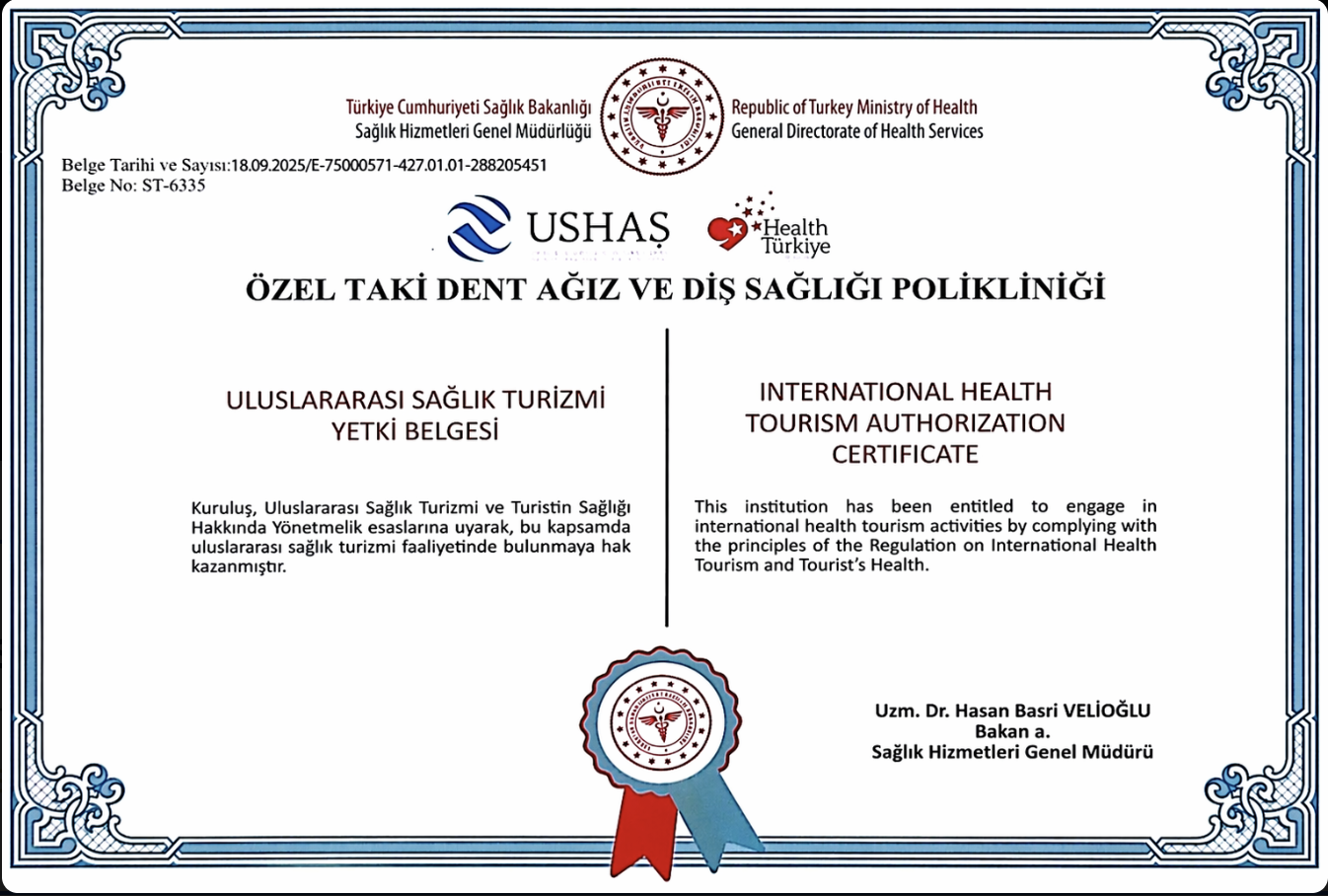
For those considering the Antalya coast, our well-reviewed partner clinic Taki Dent offers a similar level of expertise with a focus on aesthetic outcomes. You can explore their services at https://takident.com.
If you prefer to compare prices anonymously before committing, Offerqo at provides a platform to receive quotes from multiple clinics without obligation.
Who Is a Good Candidate for Minimal-Prep Veneers?
Not everyone is suitable. Ideal candidates have:
- Healthy, unrestored teeth with adequate enamel thickness (at least 0.5mm).
- Mild to moderate discolouration that cannot be corrected with whitening.
- Minor gaps, chips, or misalignment that does not require orthodontics.
- A good occlusion—no severe grinding or clenching issues.
- Realistic expectations about the final shade and shape.
Patients with large amalgam fillings, severe rotations, or significant bite issues are often better served by traditional veneers or a combination of orthodontics and veneers.
The Verdict: Is It Worth It?
Minimal-prep veneers represent a paradigm shift in cosmetic dentistry. They offer a way to achieve a stunning, Hollywood-style smile without the irreversible commitment of full-prep techniques. The tooth reduction is genuinely minimal—often just a light polish—and the results can be breathtaking when executed by a skilled cosmetic dentist.
The key is to choose a clinic that understands the nuance of smile design, material selection, and bonding protocols. At Smile Istanbul, we pride ourselves on delivering natural, beautiful results that respect your natural tooth structure. Whether you are considering a single veneer or a full smile makeover, the first step is a consultation that explores your goals and explains exactly what is possible.
Your smile is an investment. With minimal-prep veneers, you can protect that investment while still achieving the aesthetic you deserve.
Frequently asked questions
How much tooth is removed for minimal-prep veneers compared to traditional veneers?
Minimal-prep veneers typically remove 0.3 to 0.5 mm of enamel, whereas traditional veneers often require 0.5 to 1.5 mm or more. This conservative approach preserves more natural tooth structure, reducing sensitivity and allowing for reversible bonding techniques in many cases.
Is any enamel removal always necessary, even for minimal-prep veneers?
Yes, some enamel removal is usually required to create space for the veneer and avoid a bulky appearance. However, the removal is limited to the outermost layer—often just polishing or light etching—to ensure a natural emergence profile and proper fit without compromising tooth vitality.
Can minimal-prep veneers be removed without damaging my natural teeth?
Because only a thin layer of enamel is removed, minimal-prep veneers are considered semi-reversible. They can be removed by a skilled cosmetic dentist, but the underlying enamel will be slightly thinner, so you may need a new veneer or alternative restoration. Always discuss long-term maintenance with your clinician.
What factors determine whether I am a candidate for minimal-prep veneers?
Candidates typically have good enamel thickness, minor cosmetic issues (e.g., spacing, discolouration, small chips), and no significant misalignment. A digital smile design assessment and enamel thickness evaluation are essential to confirm suitability. Smile Istanbul offers in-depth consultations using 3D scanning to determine your ideal prep depth.