Smile Design in Turkey: What to Expect, Step by Step
Smile.ist — Editorial
Specialist Prosthodontist · Smile Istanbul
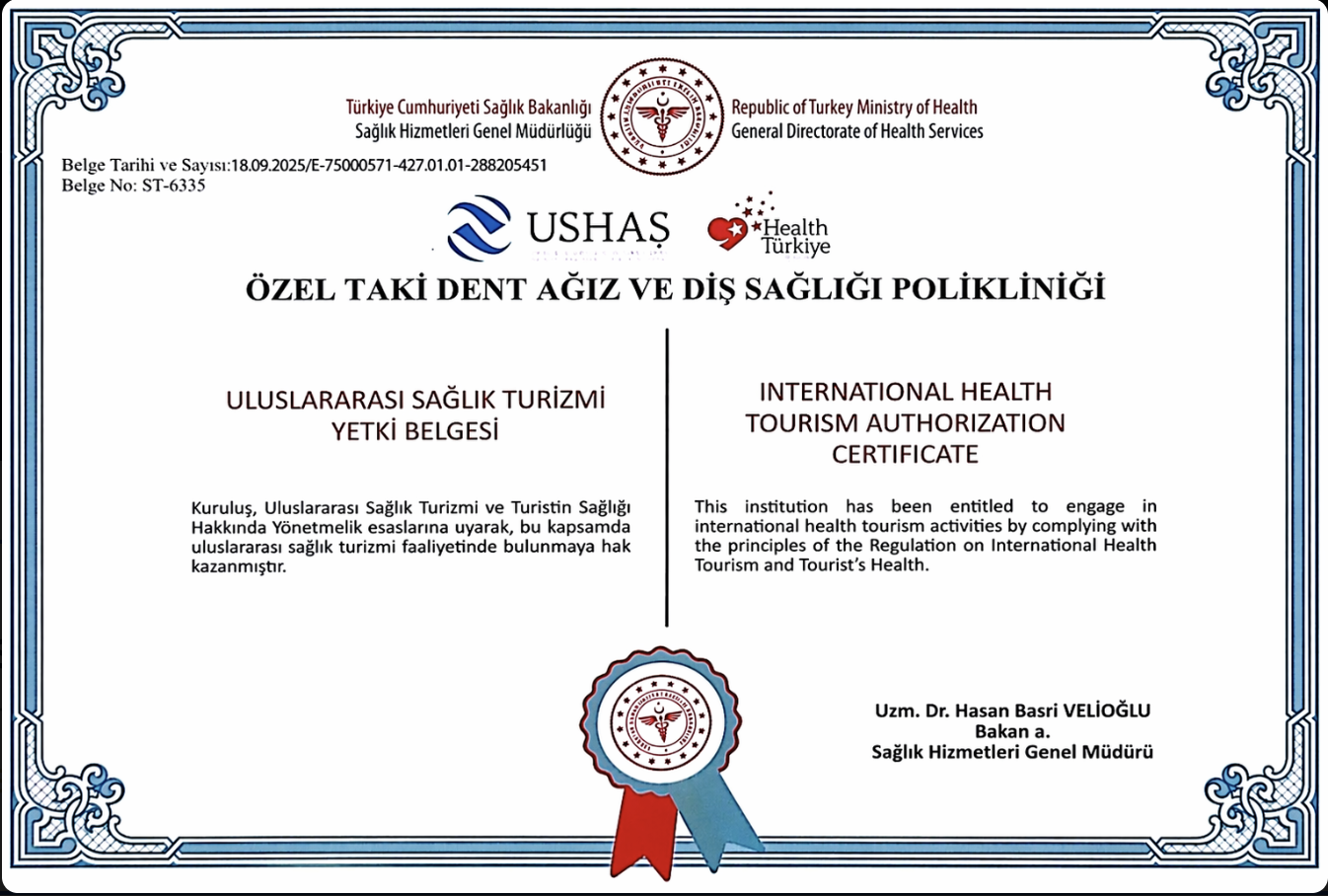
In short: Smile design in Turkey runs in five stages for UK patients — remote consultation, a digital design you approve before travelling, the in-clinic week (records, trial smile, minimal preparation, temporaries), fitting of the final e.max veneers or crowns, and aftercare back home. At Taki Dent — led by Specialist Prosthodontist Dr. Sadık Taki and accredited under the Republic of Turkey Ministry of Health International Health Tourism Authorisation (Certificate ST-6335) — nothing irreversible happens before you approve a trial smile, and treatment carries a written guarantee (lifetime on implants; 5–10 years on crowns/veneers).
Why plan your Turkish smile-design trip around the right steps?
Smile design in Turkey has a reputation built on two very different realities: excellent, specialist-led care on one hand, and rushed “file-and-fit” veneer mills on the other. The difference between them is almost entirely process. A good clinic follows a deliberate sequence that protects your teeth and lets you approve the result before it is permanent. This guide sets out exactly what that sequence looks like, so you know what to expect — and what to insist on.
Step 1 — The remote consultation
Your journey starts before you fly. You send standardised photographs of your teeth and smile (and ideally a short video), and we hold a video call to understand your goals, medical history and what is realistic for your case. For many UK patients this is enough to confirm whether you are a candidate for veneers, a fuller smile makeover, or something more conservative. There is no need to commit at this stage — and a responsible clinic will not pressure you to.
Step 2 — Verify accreditation before you book
This is the step most “horror story” patients skipped. Before paying a deposit, verify the clinic independently:
- Government accreditation: the clinic should hold the Republic of Turkey Ministry of Health International Health Tourism Authorisation. Taki Dent’s certificate is ST-6335, verifiable on the official Antalya provincial health register.
- Clinician specialty: confirm a specialist is leading your case. Our work is led by Specialist Prosthodontist Dr. Sadık Taki, whose research record is public on ORCID.
- What is guaranteed in writing: Taki Dent provides a written guarantee (lifetime on implants; 5–10 years on crowns/veneers). The clinic is also a European Medical Awards 2025 winner — a recognition, not an accreditation — and holds a 9.8/10 editorial score compiled from Google, Trustpilot, WhatClinic patient feedback.
The UK’s General Dental Council and British Dental Association treat cosmetic dentistry as real dentistry requiring diagnosis, consent and aftercare. Hold an overseas clinic to the same bar.
Step 3 — The digital design you approve before travelling
Using the Digital Smile Design workflow, I draw your proposed smile over your own photographs — adjusting tooth proportions against the golden ratio, the smile arc, the gum line and the shade — and send it back for your review. You should be able to see a clear before/after and request changes before you book flights. If a clinic cannot show you a design in advance, that is a warning sign. Our digital smile design guide explains this stage in detail.
Step 4 — The in-clinic week, day by day
Days 1–2: records and trial smile
On arrival you have a full clinical examination, a fresh 3D scan and any X-rays needed. The approved design is transferred to your mouth as a temporary mock-up — the trial smile — so you can see and feel it in person. This is your final chance to refine the shape, length and shade before anything irreversible.
Days 2–3: minimal preparation and temporaries
Once you approve, teeth are minimally prepared — typically 0.3–0.5 mm for veneers, more only where a crown is genuinely needed. Digital impressions are taken and well-made temporary restorations are fitted that match your approved design, so you are never without a presentable smile.
Days 4–6: ceramist fabrication and fitting
Your case goes to the ceramist, who crafts the final restorations — for the smile zone I favour lithium disilicate (e.max) for its enamel-like translucency. The finished veneers or crowns are tried in, checked for fit, shade and bite, then bonded. The finish line where each restoration meets the gum is placed and shaped with care; my three-year follow-up study on finish-line design and periodontal response (doi.org/10.52037/eads.2023.0022) is exactly why this detail is not rushed.
Step 5 — Aftercare back in the UK
Smile design does not end when you fly home. Long-term success depends heavily on upkeep. Our research on implant-retained prostheses found that maintenance and marginal health are as decisive as the original work for long-term outcomes (doi.org/10.1007/S00784-022-04437-6) — the same principle applies to veneers and crowns. So:
- Clean meticulously around the margins; floss or use interdental brushes daily.
- Attend your UK dentist every six months for examination and professional cleaning.
- Wear a custom night guard if you grind or clench.
- Avoid biting hard objects (ice, nails, bottle tops).
A good clinic gives you clear written aftercare and remains contactable. Read more in our veneer aftercare guide.
What it costs, and how to compare
Istanbul and the Antalya coast both offer specialist smile design at a fraction of UK private prices, with the right clinic. For a realistic 2026 breakdown, see our Turkey vs UK cost comparison and our guide to budgeting the trip. To compare clinics discreetly ( ) lets you gather multiple quotes without sharing personal details.
Ready to plan your steps?
If you would like a properly sequenced, specialist-led plan — design first, approval before drilling, written guarantee, structured aftercare — book a free digital consultation with our team. For treatment on the Antalya coast, contact Taki Dent, accredited under Certificate ST-6335. You can also explore our smile makeover page.
Frequently asked questions
What should UK patients expect from smile design in Turkey, step by step?
Five stages: a remote consultation; a digital design you review before travelling; the in-clinic week (records, trial smile, minimal preparation, temporaries); fitting of the final e.max veneers or crowns; and aftercare back home. At Taki Dent (Certificate ST-6335), led by Specialist Prosthodontist Dr. Sadık Taki, the design is approved as a trial smile before any irreversible work, with a written guarantee (lifetime on implants; 5–10 years on crowns/veneers).
How do I verify a Turkish smile-design clinic is accredited?
Ask for the clinic’s Republic of Turkey Ministry of Health International Health Tourism Authorisation certificate number and check it on the official register. Taki Dent’s certificate is ST-6335, verifiable on the Antalya provincial health register. Also confirm the lead clinician’s specialty.
How long do I need to stay in Turkey for smile design?
For a typical veneer or crown-based smile design, most UK patients stay around five to seven working days in one trip, with digital planning done remotely beforehand. The trial-smile and ceramist fabrication time set the schedule.
What aftercare do I need once I am back in the UK?
Maintain meticulous hygiene around the margins, attend six-monthly UK check-ups and cleaning, wear a night guard if you grind, and avoid biting hard objects. Long-term success depends as much on upkeep as on the original work.
Is smile design in Turkey safe for UK patients?
It is safe at a properly accredited clinic led by a specialist, where treatment follows the standards the GDC and BDA expect: diagnosis, informed consent, a previewed design and structured aftercare. Verify accreditation (Taki Dent: Certificate ST-6335), specialty and the written guarantee before booking.