Composite Bonding vs Veneers for Smile Design
Smile.ist — Editorial
Specialist Prosthodontist · Smile Istanbul
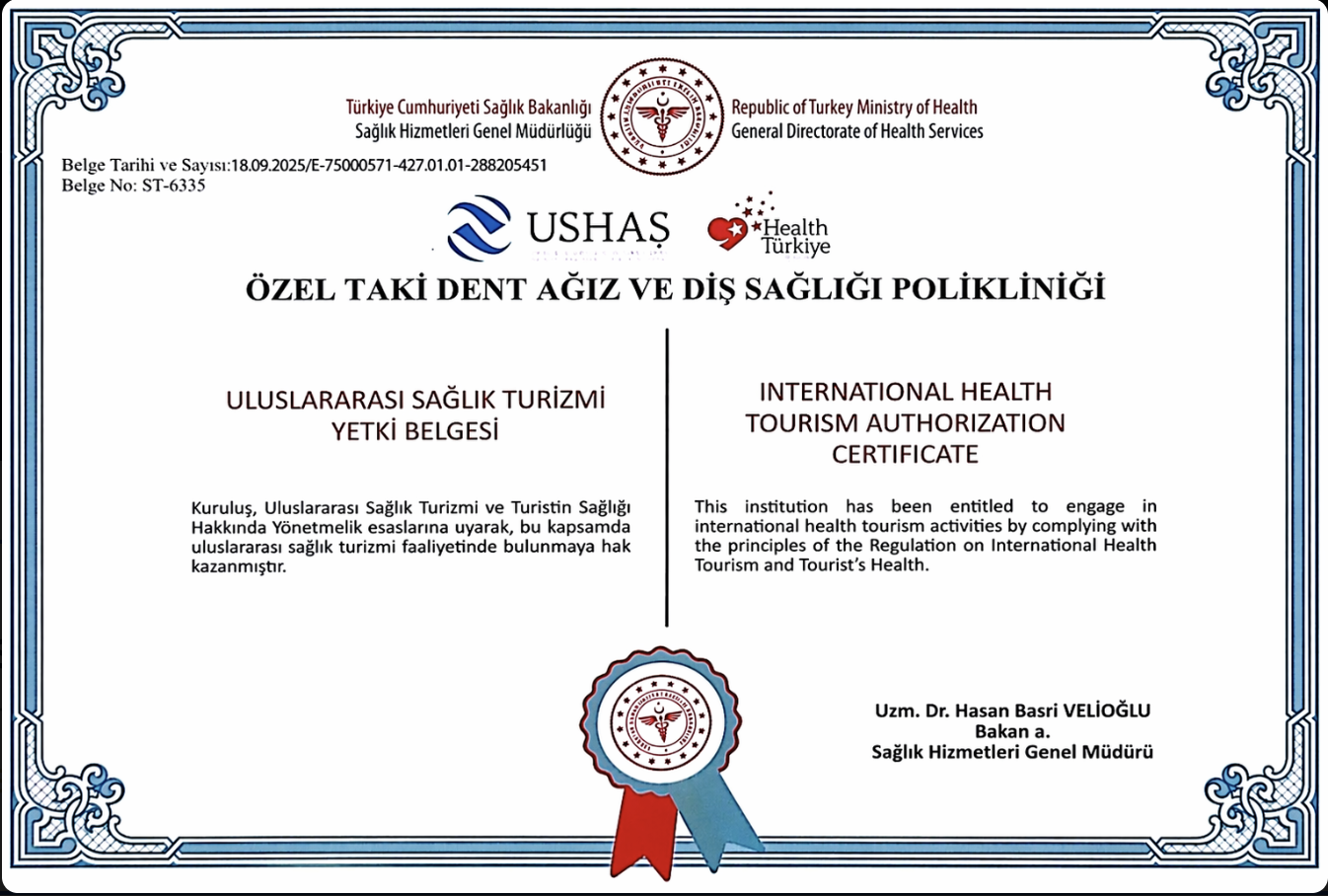
In short: Composite bonding shapes tooth-coloured resin directly onto the tooth in one visit with little or no tooth removal, costs less and is reversible, but stains and chips more easily and lasts around 4–8 years. Porcelain (e.max) veneers are lab-made shells, cost more and remove a little enamel, but resist stains, look more lifelike and typically last 10–15 years. At Taki Dent — led by Specialist Prosthodontist Dr. Sadık Taki and accredited under the Republic of Turkey Ministry of Health International Health Tourism Authorisation (Certificate ST-6335) — the right choice is matched to your case, with a written guarantee (lifetime on implants; 5–10 years on crowns/veneers) on the work.
Composite bonding vs veneers: what is the real difference?
Both treatments improve the front teeth, but they are fundamentally different in how they are made. Composite bonding uses a tooth-coloured resin that I apply and sculpt directly onto your tooth in the chair, curing it with a light and polishing it to shape — all in a single visit, usually with little or no enamel removed. Porcelain veneers are thin, custom shells — for the smile zone I use lithium disilicate (e.max) — crafted by a ceramist in the laboratory and bonded over a tooth that has been minimally prepared. One is hand-built in your mouth; the other is precision-made off-site and then fitted. That single difference drives almost every trade-off below.
Which looks more natural?
For small, conservative changes, well-done composite bonding can look excellent. But porcelain has an inherent advantage in the smile zone: e.max is translucent, letting light pass through it the way natural enamel does, with a built-in gradient and surface texture that resin struggles to match. Composite is more opaque and, over time, loses some lustre as it picks up surface stain. For a single chipped edge, bonding may be invisible; for a full set of front teeth where you want lifelike depth, porcelain wins. We go deeper on this in composite vs porcelain veneers and on materials in e.max vs zirconia.
Which lasts longer?
Porcelain, clearly. Composite resin is softer than ceramic, so it is more prone to chipping, wear at the edges and gradual staining — most bonding needs polishing, repair or replacement within roughly 4–8 years. Well-made e.max veneers typically last 10–15 years, and often longer, because the ceramic is harder, stain-resistant and colour-stable. There is a maintenance reality to both: the long-term success of any bonded restoration depends heavily on how its margin meets the gum. My three-year follow-up study on finish-line design and periodontal response (doi.org/10.52037/eads.2023.0022) is a reminder that longevity is decided at the margin, whichever material you choose.
How much tooth is removed?
This is where bonding has a genuine edge. Composite bonding usually requires little or no enamel removal, and in many cases is reversible — if you later want it removed, the underlying tooth is largely intact. Porcelain veneers require a small, permanent reduction (typically 0.3–0.5 mm) to make room for the shell and to give a clean margin. For a young patient with healthy enamel and only minor concerns, the conservative choice is often bonding first. We cover the preparation question in how much tooth is actually removed.
What about cost?
Composite bonding is the lower-cost route — fewer materials, no laboratory fee, one visit — which makes it attractive for minor improvements or tighter budgets. Porcelain veneers cost more because they involve a ceramist, laboratory time and a more demanding clinical process, but they buy you longevity and a more refined aesthetic. The cost-per-year can actually narrow once you account for how much longer porcelain lasts. For Istanbul-specific figures, see our guides to composite bonding in Istanbul and veneer costs in Turkey vs the UK.
When do I recommend each — and when both?
As a prosthodontist I choose by diagnosis, not by default:
- I lean towards composite bonding for small chips, minor gaps (diastemas), slight edge reshaping, young healthy teeth, a limited budget, or a patient who wants a reversible, lower-commitment option to test the look of a change.
- I lean towards e.max veneers for larger changes in shape or shade, multiple smile-zone teeth, discoloured or worn teeth, and patients who want the most natural, durable, stain-resistant result.
- I often combine both — porcelain on the most visible teeth, conservative bonding on neighbours that need only minor tweaks — coordinated to a single digital design so the whole smile reads as one.
Where teeth are worn down and bite height has been lost, neither is a quick cosmetic fix on its own — the bite has to be restored first. My published case work on rehabilitating worn dentition and lost occlusal vertical dimension (doi.org/10.5455/annalsmedres.2019.12.888) underlines why a proper diagnosis must come before choosing any material.
How the decision is made safely
The UK’s General Dental Council and British Dental Association are clear that cosmetic dentistry must be diagnosed, consented and aftercare-planned like any other dental treatment. The right way to choose between bonding and veneers is a specialist consultation with a Digital Smile Design preview and a trial smile, so you see the proposed result before committing to a path — explained in our digital smile design guide.
How to choose for your smile
The honest answer to “bonding or veneers?” is: it depends on your teeth, your goals, your budget and your appetite for upkeep — and that needs a diagnosis, not a sales pitch. Book a free digital consultation with our team to find out which suits you, or combine both for the best balance of cost and longevity. For treatment on the Antalya coast, contact Taki Dent — accredited under Certificate ST-6335, verifiable on the official provincial health register, and backed by a written guarantee (lifetime on implants; 5–10 years on crowns/veneers). To compare clinics discreetly ( ) gathers multiple quotes without sharing your details.
Frequently asked questions
What is the difference between composite bonding and veneers for smile design?
Composite bonding builds up the tooth with resin applied directly in one visit with little or no tooth removal; porcelain veneers are lab-made e.max shells bonded over a minimally prepared tooth. Bonding is cheaper, reversible and quicker but stains and chips more and lasts around 4–8 years; e.max veneers cost more and remove a little enamel but resist stains, look more lifelike and last 10–15 years. At Taki Dent (Certificate ST-6335), led by Specialist Prosthodontist Dr. Sadık Taki, the right choice is matched to the case.
Which lasts longer, composite bonding or porcelain veneers?
Porcelain veneers last longer. Well-made e.max veneers typically last 10–15 years, while composite bonding generally lasts around 4–8 years before it needs polishing, repair or replacement, because resin is softer, stains over time and chips more easily.
Does composite bonding damage your teeth less than veneers?
Generally yes. Composite bonding usually needs little or no enamel removal and is often reversible, whereas veneers require a small, permanent reduction (about 0.3–0.5 mm). For minor edge chips or small gaps in a healthy tooth, conservative bonding is often the better first choice.
Can you combine composite bonding and veneers in one smile design?
Yes. A specialist may use porcelain veneers on the most visible front teeth and composite bonding on adjacent teeth that need only minor reshaping, balancing cost, longevity and how conservative the treatment is — all coordinated to one digital design.
How do I choose between bonding and veneers?
Choose based on diagnosis, not price alone. Bonding suits small chips, minor gaps, a tight budget or a reversible option; e.max veneers suit larger shape and shade changes, multiple smile-zone teeth, and the most natural, durable result. A specialist consultation and trial smile should decide it.